
A modular AI workflow built in Flora.ai that produces a cohesive, professional lookbook for a fashion brand. It takes an existing fashion campaign video as its motion base, then treats each visual layer — model, garment, background — as an independently swappable variable within a single systemic pipeline, preserving the source video's camera movement, timing, and edit rhythm.
Goal
To create a visually cohesive lookbook for a high-end fashion brand by using an existing campaign video as a motion base, then systematically replacing the model, clothing, and background city through a node-based workflow.
Steps
Planning — Define the concept, mood, and style; select the base video and reference images.
Shooting (Video Base) — Import the source campaign video, cut scenes, lock camera path, timing, and edit rhythm as the fixed "motion container."
Creating Layers — Create flatlays of new clothing combinations, create new model profiles (left, right, centred)
Editing (Layer Swaps) — Run the four swap branches: garment replacement, model replacement, lighting replacement and background/city replacement.
Finalising — Re-integrate all layers into the original timeline, compile into a cohesive motion feature.
Creative Director role
As Creative Director, I was responsible for overseeing the entire process: conceptualising the shoot direction, selecting image references, directing the AI outputs to match the brand's aesthetic, and ensuring the final output met the brand's visual standards. The role shifts from executing a shot to orchestrating a pipeline — the creative decision is which variables to swap and in what combination.

Node-based production workflows
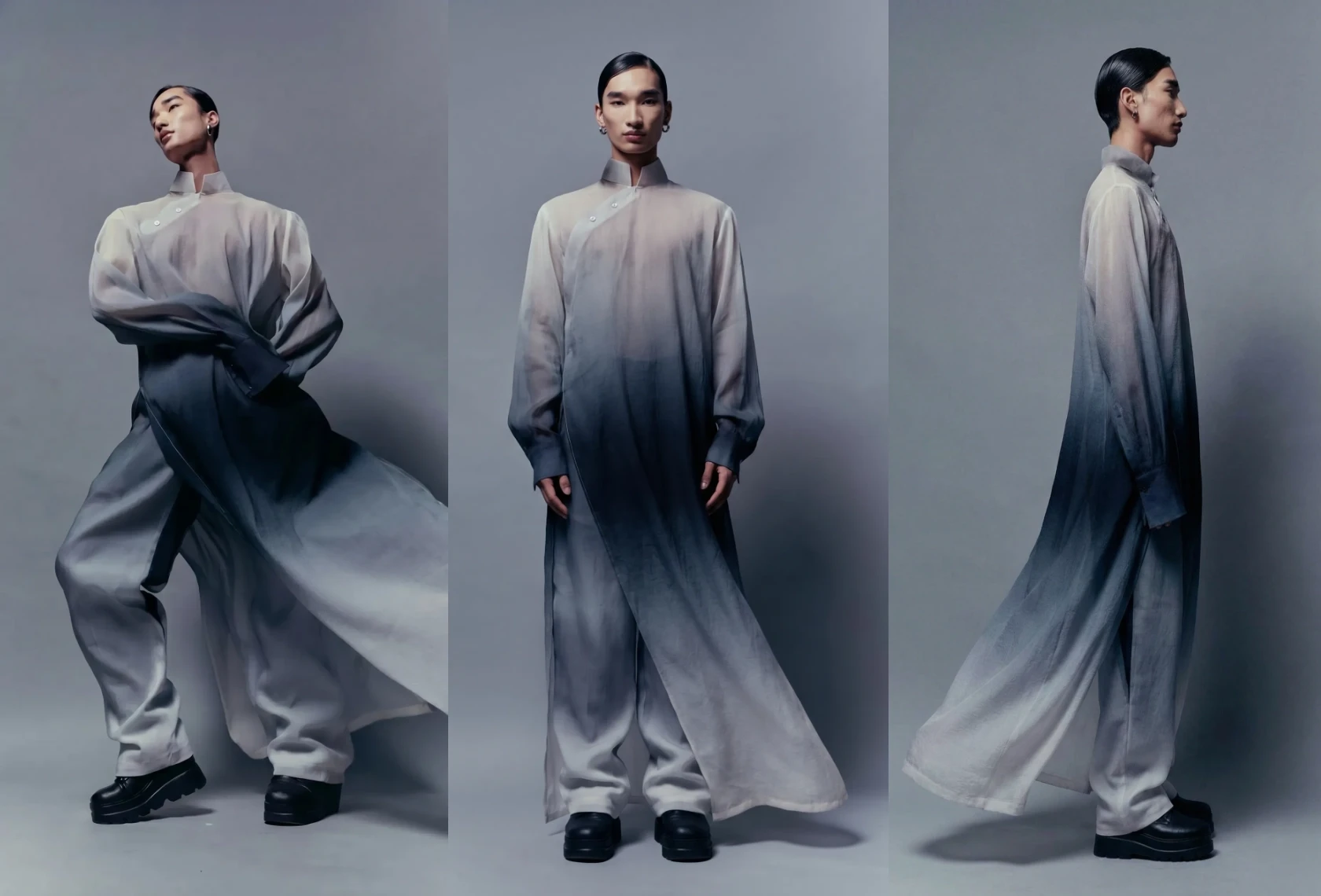
Different generated angles of the model

Scene 1 - captured from JENNIE is the Face of the CHANEL 25 Handbag Campaign
Scene 1 - model swap
Model and background swap
Outcome
A single base video generates multiple lookbook variants, each combining a different model, garment, and city, all from one workflow run. No reshoot, location scouting, or model casting was required. The pipeline is reproducible, so any team member can drop in new references and regenerate a variant in minutes.
Reflection
The source video functions as a motion template. Its camera path, the model's gait, and the edit rhythm are preserved as the structural skeleton of the output, while the visual identity — the model, the garment, and the environment — is entirely replaced.
This kind of workflow works best when the replacement product has a similar silhouette and scale to the original, because extreme shape differences are harder to composite convincingly.
The workflow also requires clear rights and approval boundaries. All source footage, model references, and garment imagery must be licensed or owned by the user, and outputs should not be presented as real campaign material without explicit permission from the brands involved.
The nature of work changes with systematic AI workflows meant for scale.
Control vs. speed — the systemic workflow trades frame-by-frame control for batch-level consistency. Small artefacts (hand distortion, garment physics) are mitigated by iterative node re-runs.
Creative role — the designer role shifts from executing a shot to orchestrating a pipeline. The creative decision is which variables to swap sequentially, not how to film each element.
This positions the campaign-in-a-box as a production template that scales to multi-market localisation (swap city + model per region) or A/B testing (swap garment per variant).