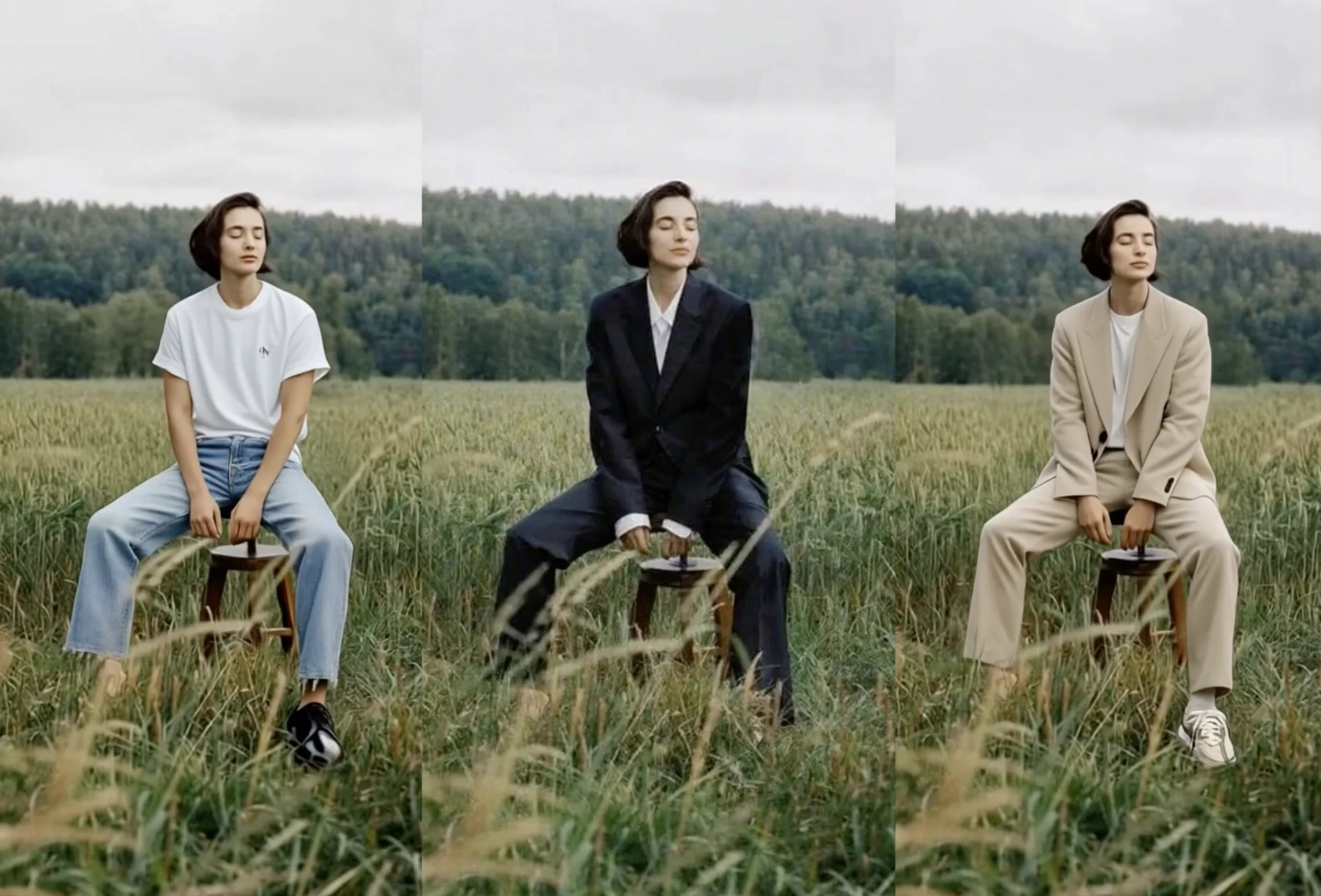
The lookbook engine transfers different garments of a clothing line onto a model in a video. The process works in two stages: first, a flatlay image of the target garment is generated from a reference photo of a model wearing it. Then that flatlay is fed into a Kling video node to replace the model's current outfit in the source video, preserving the original movement and framing.
This workflow isolates the single production task of producing individual looks for a lookbook and demonstrates how a node-based pipeline can handle it end to end without manual compositing.
Goal
To create a series of looks for a clothing line, without the physical garments ever being on set. The workflow compresses a task that traditionally requires a wardrobe department, a shoot day, and a compositing pass into a single generation step. The designer's role is to select the reference garment and tune the prompt, not to execute the swap frame by frame.
Limitations
The transfer works best when the target garment has a similar silhouette and drape to what the model is already wearing. Extreme changes such as from a fitted blazer to an oversized hoodie are harder to composite convincingly because the model's body shape and movement were captured under the original garment's physics.

Automated production workflows for creating flatlays from a reference photo and transferring it to the model in the base video.

Outfit for flatlay reference

Outfit swap inside base video
Compiled outfit swap
Outcome
One source video plus a garment reference produces a new video of the model in the swapped outfit. The pipeline is repeatable: change the reference image and regenerate, no reshoot required.
Reflection
The workflow makes the garment the unit of creative decision. Everything else such as the model's movement, the camera, the framing, is inherited from the source. The designer's input is reduced to two choices: which garment to feed in, and how to describe it in the prompt. That's a meaningful compression of the traditional wardrobe-to-screen pipeline, but it also means the output is only as good as the reference image. A poorly photographed garment reference produces a poorly composited result, and there's no "reshoot" to fix it.