
Glimmer Puffer - A futuristic winter apparel. Crafted with 100% premium down filling, every stitch is designed to lock in heat and keep the cold out, no matter where the day takes you.
The goal was to create a futuristic but accessible clothing line — garments that carry the visual language of advanced, iridescent materials while remaining grounded in wearable silhouettes. Starting from reference imagery that captured that aesthetic, a cloak concept was developed, then reworked into a puffer jacket. The iridescent down-filling material needed to be validated in three ways (standalone, cross-section, on-model) before committing to production. No physical sample existed.

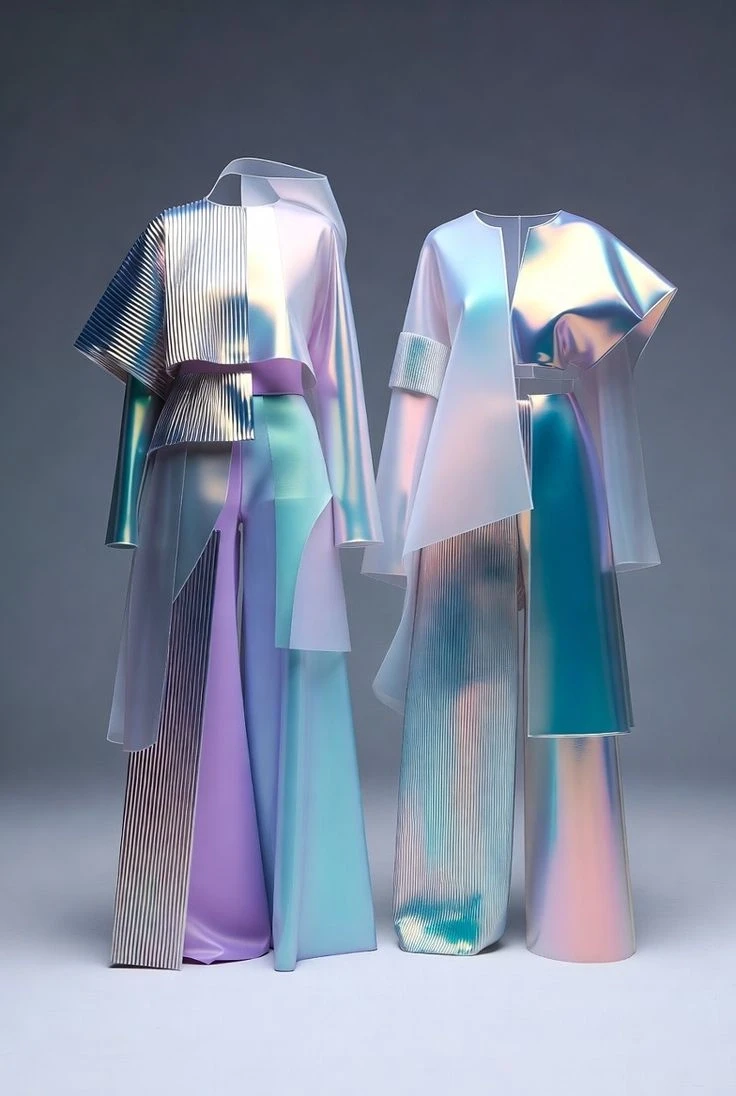

Reference style and material
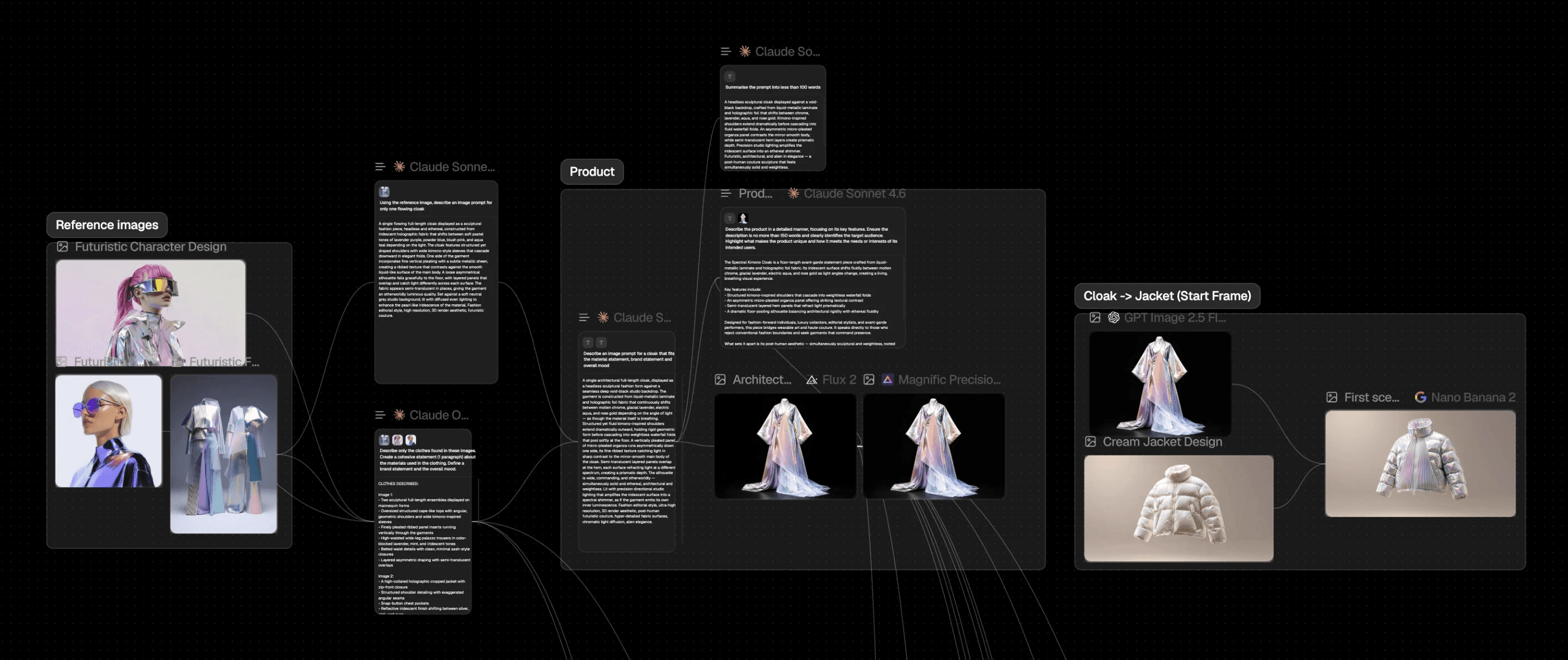
Reference to concept product workflow
Cross-section model
The rendered puffer jacket is fed into a wireframe reference node, which strips away the surface material and exposes the underlying mesh geometry — the baffle lines, panel seams, and volumetric structure that give the jacket its shape. From that wireframe, a second pass adds the down filling visualization: the internal geometry is populated with the fill pattern, showing how the iridescent material distributes across the garment's volume. The result is a technical, almost architectural view of the jacket — less a product render, more a blueprint — where the relationship between shell structure and internal material is legible at a glance. The Nano Banana 2 node handles this transformation, taking the photorealistic input and producing the structural output in a single step.
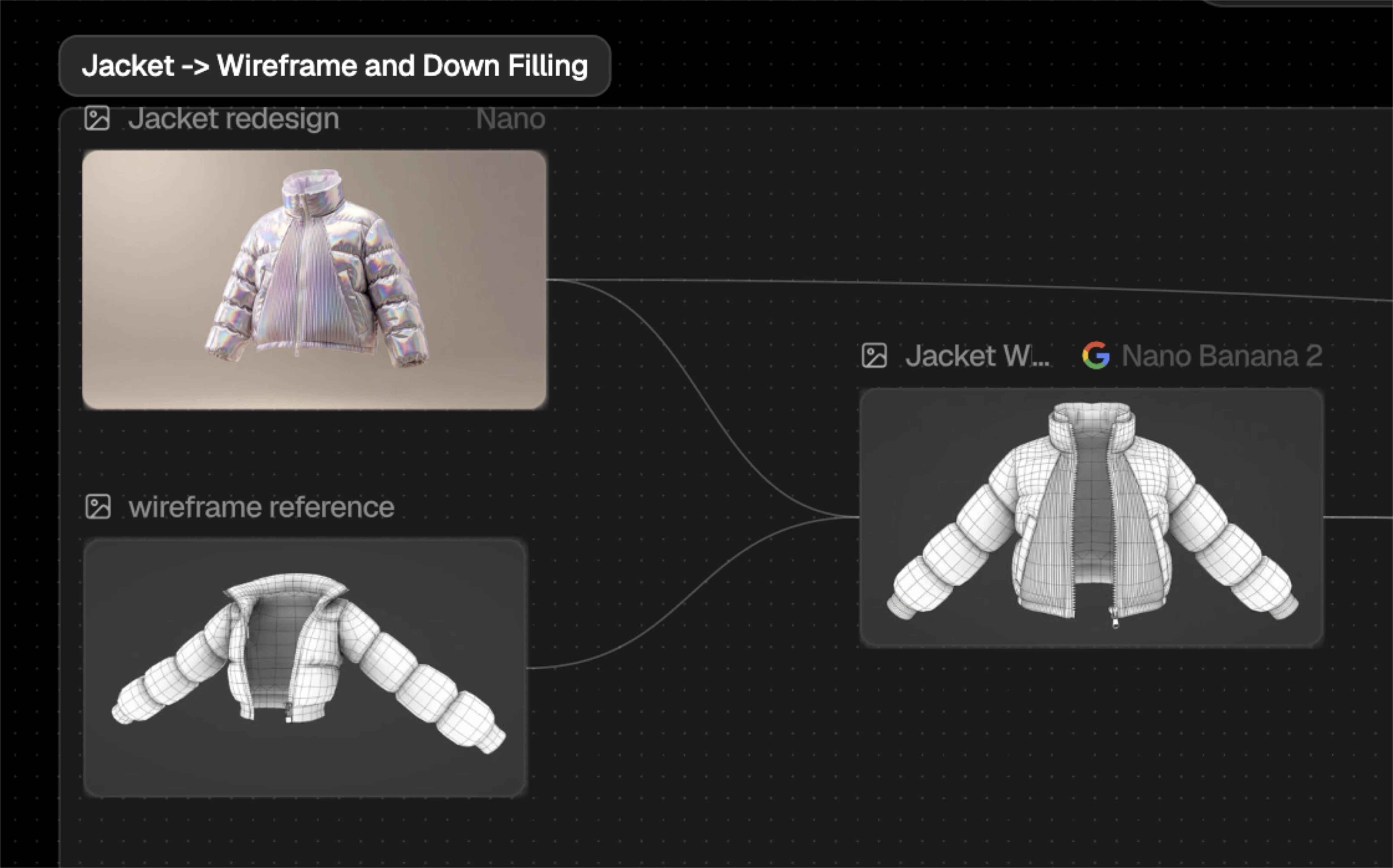
Cross-section wireframe workflow

Generating down material within the wireframe
Model try-on
The redesigned jacket is then applied to a set of model references through a series of Nano Banana 2 nodes. Each node takes the model reference and the jacket as separate inputs, composites them, and outputs a single coherent image — correct drape, proportion, and lighting. This is the final validated output of the try-on stage: the moment the material concept becomes a wearable product on a body.
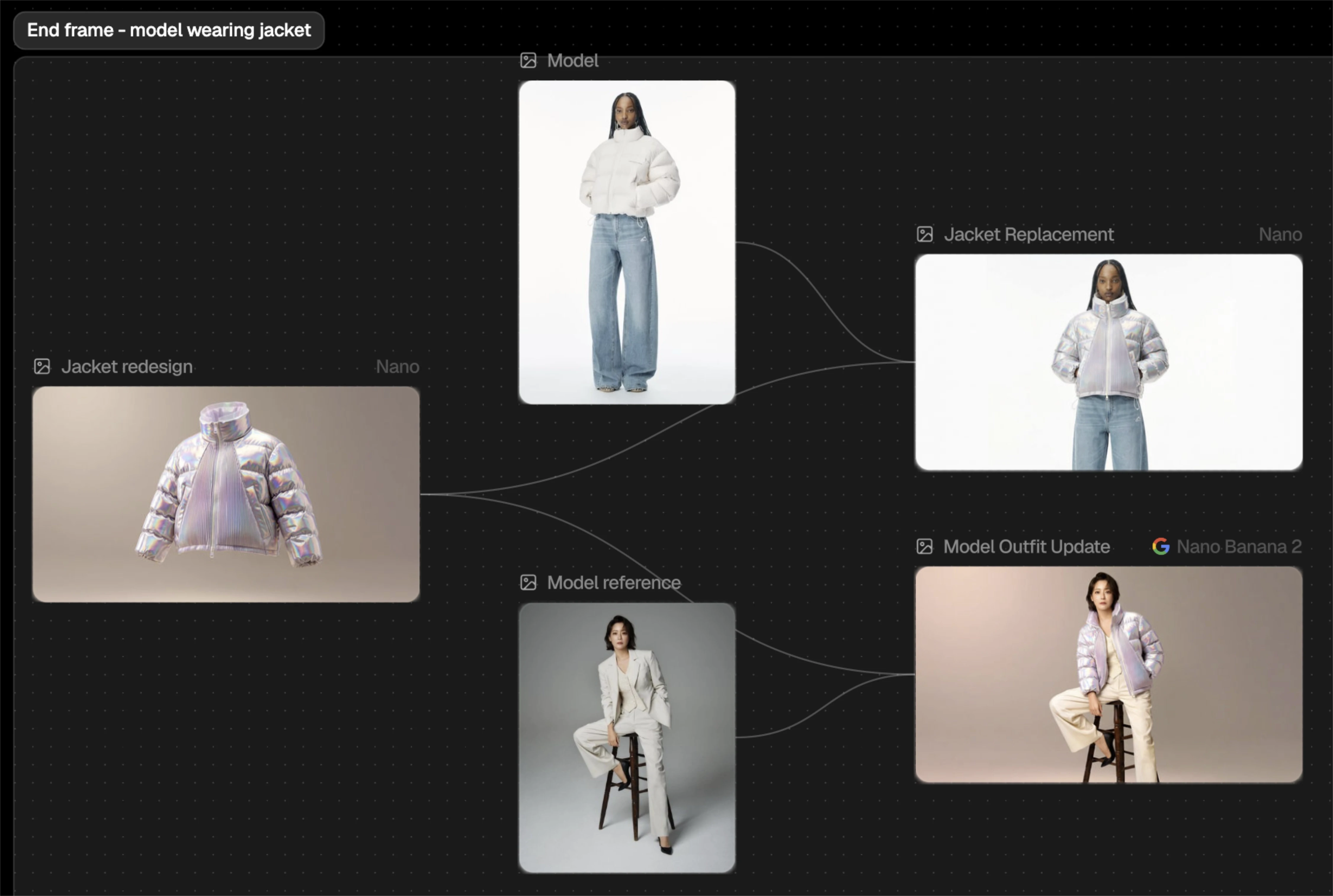
Model try-on workflow
Reflection
The glimmer puffer workflow demonstrates a four-stage validation pipeline on FLORA's canvas. The garment transform node reworks the source cloak into a puffer jacket silhouette while preserving the iridescent down-filling material. The cross-section node produces a wireframe render exposing baffle geometry and fill distribution — a structural reference that would otherwise require a physical sample to verify. The try-on nodes composite the finished jacket onto model references, confirming drape, proportion, and material visibility at the collar and hem.
Each stage is a discrete checkpoint. Any single node can be re-run — swap the material reference, adjust the target silhouette, change the model or pose — without invalidating outputs from other stages. Iteration cost is proportional to the change, not the full pipeline.
The practical outcome is a material concept that previously required a physical sample to validate is now testable in a single session, with each stage producing a shareable output for client review or internal sign-off before production begins.